
出发吧爱情
新中免签后首个暑假 7月份入境我国旅客四分之一来自中国_我的网站

A | 新加坡今年7月入境旅客达160万人次,其中四分之一来自中国。(取自早报网) (新加坡讯)新中实行免签后的首个暑假,今年7月入境新加坡的旅客达到160万人次,其中四分之一来自中国。

B | 《联合早报》报道,上个月入境新加坡的旅客,较去年同期的142万人次增加近13%。今年首7个月入境新加坡的旅客入境人次则共计978万人,与去年同比增加近三成。新加坡旅游局在网站公布最新7月份的入境旅客数据。在上个月抵达新加坡的旅客中,来自中国的旅客最多,占总旅客量的四分之一以上,达41万2940人次。

C | 这是新中两国自2月实施免签后的第一个中国学校暑假,因此今年7月的暑假,来自中国的旅客较去年同期增加了近八成。今年首7个月,入境新加坡的中国旅客已达到186万人次,较去年同比增加将近一倍。
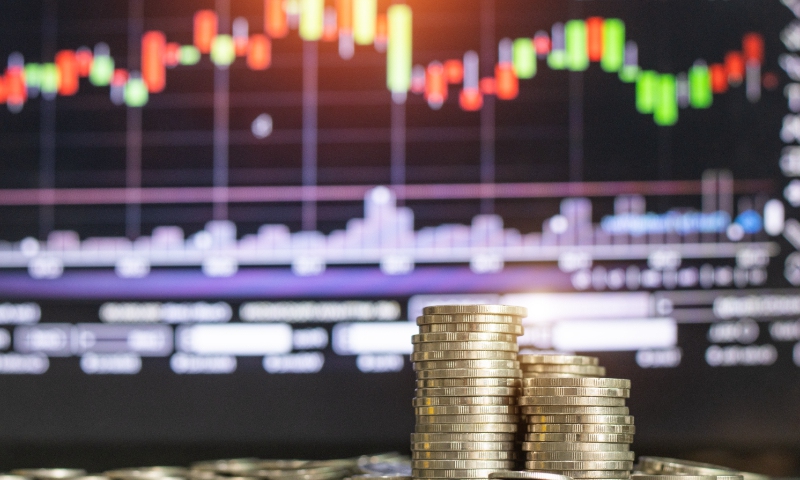
The designation of Deutsche Bank, a key and influential bank in Europe, to serve as the yuan-clearing bank will greatly facilitate and expand the use of the yuan in the EU market, providing more impetus to broader China-EU economic and trade ties, a Chinese analyst said on Tuesday.
The People's Bank of China (PBC), the central bank, announced on Monday that it had decided to authorize Deutsche Bank to serve as the yuan-clearing bank in Frankfurt, Germany, based on a memorandum of understanding with the Deutsche Bundesbank.
The move came as China-EU trade and economic ties continue to deepen and bilateral trade continues to expand, despite recent restrictions imposed by the European Commission.
In a statement sent to the Global Times on Monday, Deutsche Bank said that following the appointment by the PBC, it will facilitate direct end-to-end processing, clearing and settlement services for cross-border yuan transactions for European financial institutions and businesses, acting as a local bridge to China's payment systems.
Deutsche Bank, a global systemically important bank as well as the world's largest euro-clearing bank, said that it is the first foreign bank in Europe to receive this designation.
"Securing yuan-clearing capability in Europe reinforces our role as a trusted global clearing partner and our long-standing support for yuan internationalization. It strengthens China-Europe financial connectivity and enhances our ability to support clients' cross-border trade and investment flows with greater choice and flexibility," Alexander von zur Muehlen, CEO of Asia Pacific, Europe, Middle East & Africa and Germany at Deutsche Bank, said in the statement.
Xi Junyang, a professor at the Shanghai University of Finance and Economics, told the Global Times on Tuesday that while a number of Chinese banks are already performing yuan-clearing functions in the EU, the addition of Deutsche Bank, with its deep roots in the local market, carries great significance.
"Banks have different client bases, and Deutsche Bank has many European companies as its customers. With the appointment, these market participants enjoy a far greater degree of facilitation and ease in tapping yuan use cases," said the professor.
Companies and financial institutions can also avoid risks of foreign exchange losses as they can now directly choose yuan-euro settlement and bypass the use of a third currency, the expert said, noting that China-EU trade and investment ties will be one step closer with a local clearing bank coming onboard.
Tian Lihui, dean of the Institute of Financial Development at Nankai University, told the Global Times on Tuesday that the latest development, some 12 years after the first-yuan clearing bank form a Chinese bank was set up in Frankfurt, marked a milestone as the yuan-clearing system in Europe has evolved from a model where "Chinese entities handle clearing for Europeans" to one where "Europeans handle yuan-clearing themselves."
The decision by one of Europe's largest domestic banks to integrate into the yuan-clearing system signals that China-Europe financial cooperation is moving beyond the shallow level of facilitating trade settlements into the more substantial level of jointly building financial infrastructure, Tian said.
For both China and Europe, this move represents a mutually beneficial institutional alignment, Tian said. "China gains greater depth in the offshore yuan market, while Europe secures an additional strategic option amid the contest of major currencies."
Brussels has recently been intensifying its use of restrictive trade and regulatory tools across sectors ranging from clean technologies to digital infrastructure and foreign subsidies, with many of these measures seen as directly affecting Chinese firms and adding strain to China-EU economic relations.
However, despite these moves, deepening industrial and supply chain integration and the strong complementarity of the two economies have continued to push bilateral trade to new highs. In the first seven months of 2026, China's total trade with the EU stood at 3.67 trillion yuan ($543.90 billion), up 9.5 percent year-on-year, data from China's General Administration of Customs showed on Friday.
As China-EU economic and trade ties continue to expand and deepen, demand for the yuan to be used in the EU market will rise proportionately, and more EU banks will likely be authorized to serve as yuan-clearing banks, Xi Junyang said.
Financial cooperation between the world's largest trading bloc and the largest trading nation has accelerated in recent months. In May, the PBC renewed and expanded a bilateral currency swap agreement with the National Bank of Serbia, increasing the value of the swap from 1.5 billion yuan to 5 billion yuan.
Almost 80 percent of the surveyed Chinese companies operating in the EU plan to expand their investment, even amid tightening policies in the EU and an increasingly complex business environment, according to a report published by the Chinese Chamber of Commerce to the EU and the China Economic Information Service in March. Fostering cooperation in emerging industries and cross-border finance have been highlighted by industry insiders as new growth drivers of China-EU trade and economic cooperation.
The yuan accounted for 3.1 percent of global payments in June, rising from 2.75 percent in the previous month, and ranking as the fifth most active currency for global payments by value, according to a report from the Society for Worldwide Interbank Financial Telecommunication. In terms of trade finance, the yuan ranked second with a market share of 8 percent.
。除了中国,7月单月入境新加坡人数排名第二的是印尼,入境旅客为20万9840人次(同比减少8.7%);排名第三的是澳洲,达10万5660人次(同比增加7.4%),而来自马来西亚的旅客则有所下滑。

D |
Current article:http://x5cn.xiadiaosengchengcun.shop/0w4m/zzdl.html
Published on:01:44:28
[责任编辑: 扁安]
评论
-
关于我们 | 我的网站 版权所有
Copyright ? 2019 我的网站 All Rights Reserved